
Sagging breasts
Breasts begin to sag when the skin loses elasticity and the supporting tissue weakens — often after pregnancy, breastfeeding, weight changes, or simply with the years. With mild laxity and mainly a sense of lost volume, restoring volume can be enough. With true ptosis, where the nipple also sits lower, a breast lift gives the most lasting result. During a consultation we assess what is realistic in your situation.
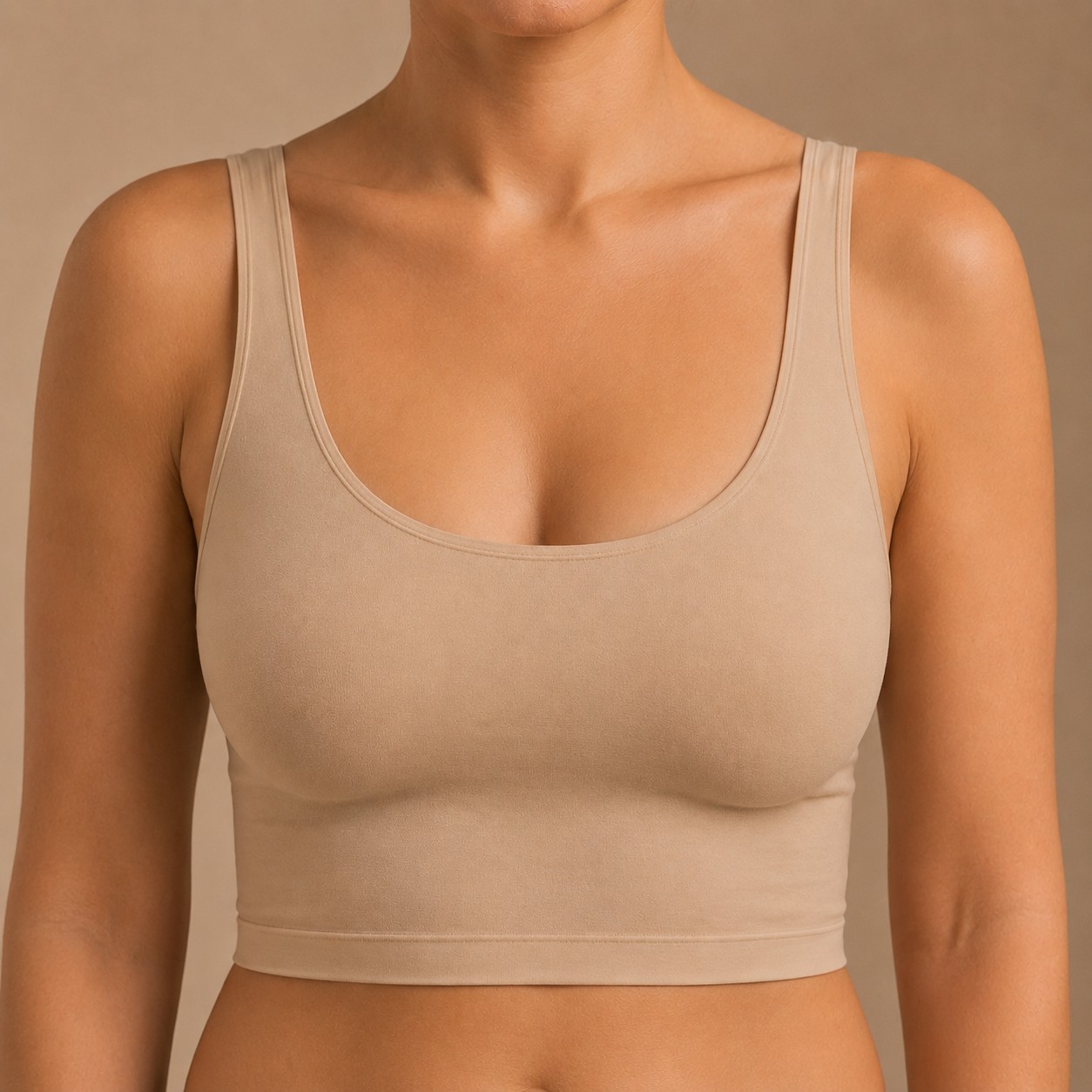
Breast tissue has little support of its own: it is held in place mainly by the skin and by the ligaments within the breast. When that support weakens, the breast drops and the nipple turns downward with it. The most common causes:
Honest advice starts with two questions: how pronounced is the laxity, and is it mainly excess skin or mainly lost volume? That determines the approach.
| Situation | Recommended approach | Doctor |
|---|---|---|
| Mild laxity, mainly a sense of emptiness | Volume restoration with lipofilling or a breast augmentation — sometimes without a lift | Dr Decoene |
| Moderate to pronounced ptosis, nipple sits lower | Breast lift (mastopexy): excess skin is removed and the nipple repositioned higher | Dr Decoene |
| Ptosis combined with volume loss | Breast lift combined with volume (implant) | Dr Decoene |
Non-surgical skin tightening can support the appearance of the décolletage, but it does not lift a breast that has genuinely dropped. Unsure whether to tighten or lift? During the consultation we assess skin quality and nipple position, and propose what is achievable — without steering you toward a procedure you don't need.
A breast lift gives its best results at a stable weight, after breastfeeding has ended, and with realistic expectations about shape and scarring. If you are still planning a pregnancy, waiting is usually wiser, since a new pregnancy can change the result again.
A breast lift is a surgical procedure. Excess skin is removed and the nipple repositioned higher; depending on the technique, the scar runs around the areola, vertically downward, and sometimes into the breast fold. Scars fade over the months but remain present. Recovery generally spans a few weeks, with a supportive bra and a gradual return to activity. The final appearance shows once the swelling has settled.
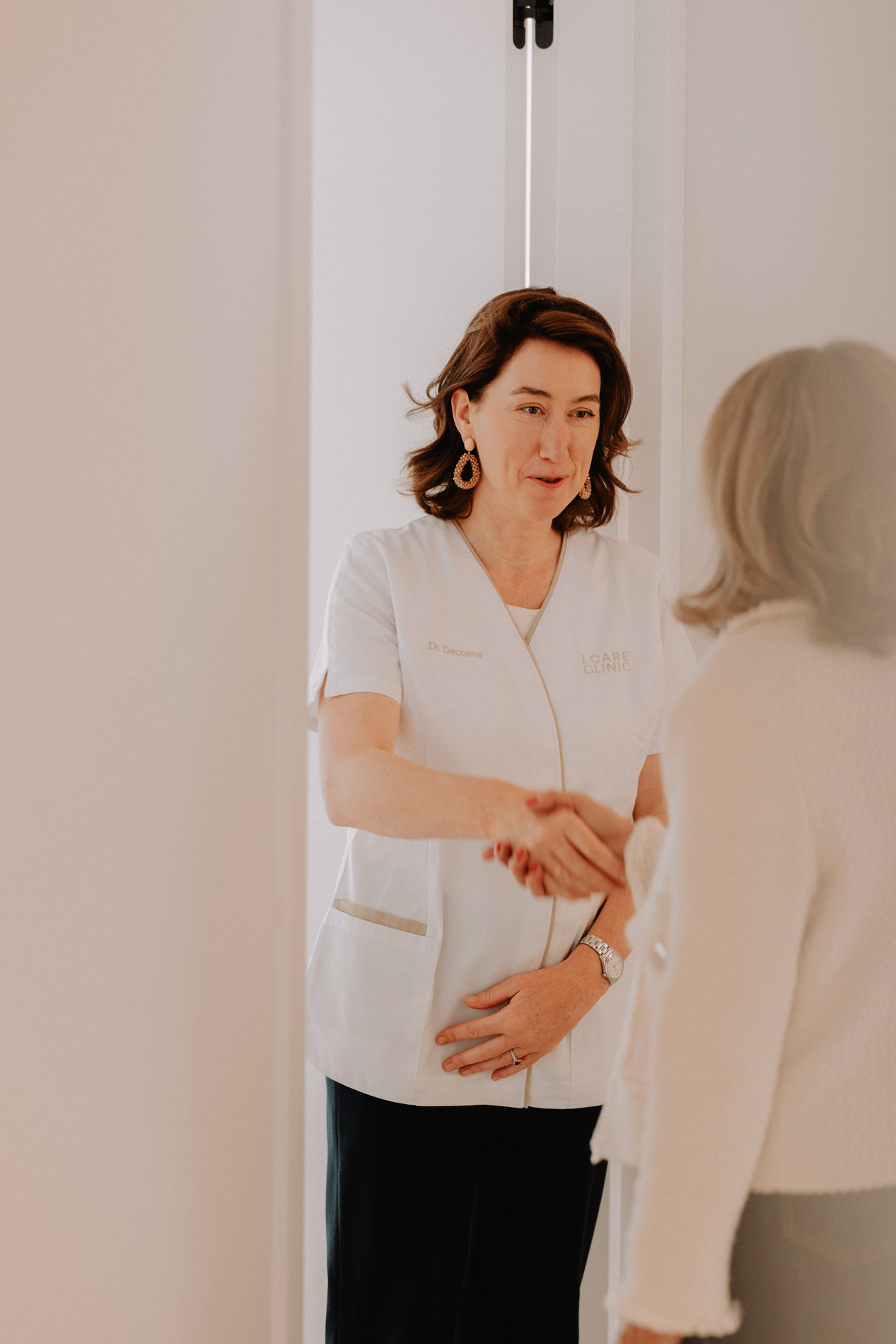
The right choice depends on your skin and the position of the nipple, not on a general rule. Feel free to request a consultation at I Care Clinic — together we'll look at whether tightening, a lift, or a combination with volume makes the most sense for you.

Ptosis is when the breast drops and the nipple comes to sit below the breast fold. Mild, moderate and pronounced ptosis blend into one another; the nipple's position relative to the fold helps determine the degree.
Tightening treatments can support the appearance of the décolletage skin, but they do not lift a breast that has genuinely dropped. With pronounced ptosis, only a breast lift gives a lasting result.
A breast lift repositions the breast higher and removes excess skin, without increasing volume. An augmentation adds volume. With ptosis and a sense of emptiness, the two are sometimes combined.
A breast lift always leaves scars. They are placed as discreetly as possible and fade over the months, but do not disappear completely. During the consultation we explain the scar to expect with your technique.
Recovery generally spans a few weeks, with a supportive bra and a gradual build-up of activity. The exact duration depends on the technique and your situation.
The price depends on the technique and whether volume is combined. You receive a personal estimate during the consultation.
Testimonials


