Hair loss is normal. Everyone loses 100 to 120 hairs a day. But new hairs grow every day. As a result, the hair on your head does not become thinner. Nor do you get bald patches. With age, you lose more hair. The head hair then becomes thinner everywhere. This happens to everyone.
There are also special forms of hair loss. Doctors call it alopecia. For example, when you suddenly develop one or more bald patches on your head. We distinguish different degrees of hair loss, each with a specific cause:
Normal hair loss
With normal hair loss, you lose no more than 120 hairs a day. As you get older, you notice that your hair slowly becomes thinner. This is normal.
A lot of hair loss
With a lot of hair loss, you lose more than 120 hairs a day and this causes your hair to become thin even faster. This can be due to stress, fever, underweight, iron deficiency, childbirth, illness or surgery, for example.
Retreating hairline
In men, this manifests itself by the front of the head becoming increasingly bald. Bald spots also appear on the side of the forehead. The upper part of the head (the crown) also becomes bald. In women, the hair in the middle of the head becomes thinner. The hair on the front of the head usually stays put. There are usually no real bald patches. Men often have this form of baldness. But 1 in 3 women can also suffer from it, for instance after menopause. Going bald at a younger age is usually hereditary.
Tackle your hair problems early and book a consultation at I Care Clinic to find an adequate treatment.
Hair loss rarely happens without a reason. It’s usually the result of a combination of internal and external factors. The good news? Once we identify the root cause, we can treat it effectively. These are the most common triggers of hair loss:
Chronic or intense stress can disrupt the hair renewal cycle. Many follicles enter a resting phase, causing sudden shedding. This phenomenon is called telogen effluvium and often appears weeks or months after the stressful event.
Certain medications, such as antidepressants, blood thinners, or chemotherapy, can cause hair loss as a side effect. Supplements like anabolic steroids or excessive use of sports enhancers may also inhibit hair growth.
Deficiencies in iron, zinc, protein, or vitamin D can weaken hair structure and slow down growth. An unbalanced diet or chronically unhealthy lifestyle often shows up in the condition of your hair.
Following a serious infection, surgery, or prolonged illness, your body focuses on recovery, which can reduce energy allocated to hair growth. This type of hair loss is usually temporary but may need extra support.
Androgenetic alopecia, or hereditary hair loss, is the most common form in both men and women. It typically begins at the hairline or crown and is caused by increased sensitivity to the hormone DHT (a derivative of testosterone). Fortunately, there are effective ways to slow down this process.
Pregnancy, childbirth, menopause, or thyroid dysfunction can disrupt your hormonal balance. Hair is often one of the first places this shows. Symptoms include diffuse thinning, slower growth, or visibly thinner areas.
As we age, hair growth naturally slows. Hair follicles shrink, the hair shaft becomes thinner, and shedding increases. While this is a natural process, it isn’t necessarily irreversible. With the right approach, we can keep your hair healthy and full.
Tight hairstyles, frequent brushing, heat styling tools, or harsh chemical treatments can damage the roots and lead to breakage or hair loss.

Up to 70% of men experience hair loss at some point. It often starts with a receding hairline or thinning at the crown. Genetics play a key role, but stress, diet, and hormones can accelerate the process. The good news? Hair loss in men is highly treatable!
Curious about your options? Read the full blog article on hair loss in men.
For women, hair loss often presents as diffuse thinning, especially at the top of the head. Causes are frequently hormonal (e.g., post-pregnancy or menopause), related to stress, iron deficiency, or thyroid issues. Because female hair loss is often more subtle and complex, it requires a tailored, careful approach.
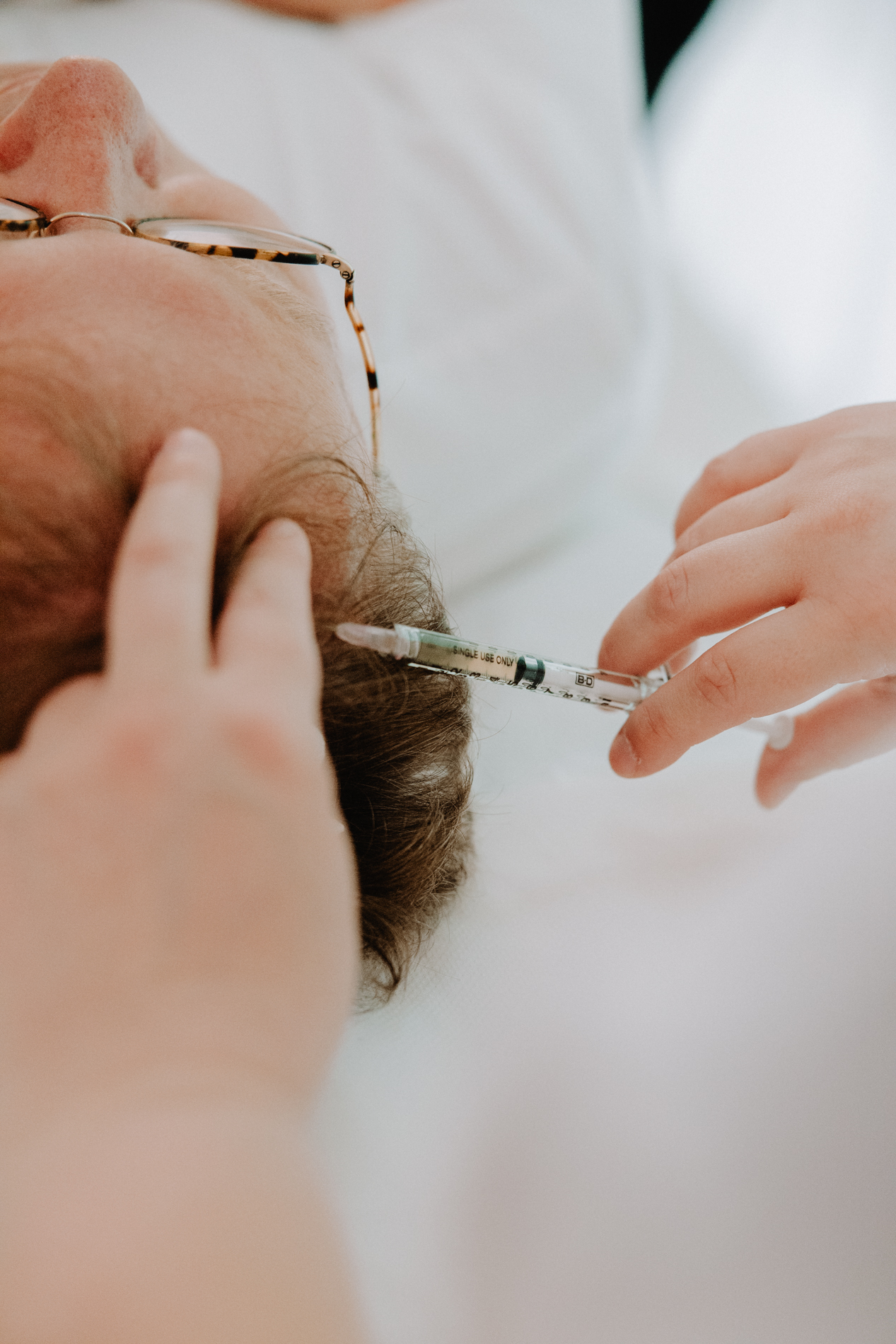
This treatment uses your own blood plasma, rich in growth factors, to stimulate hair growth. The plasma is injected into the scalp, where it activates hair follicles and promotes natural hair regrowth.
Discover how PRP reduces hair loss and stimulates hair growth.
Hair Fillers promote hair growth using a peptide- and hyaluronic acid-based gel. The treatment nourishes follicles from within, reduces hair loss, and results in fuller, stronger hair for both men and women.
See how Hair Filler restores volume and strength to your hair.
Healthy hair starts from within. Our nutritionist conducts a personal dietary analysis to detect deficiencies. Based on this, you’ll receive targeted advice and supplements to strengthen hair structure, improve scalp condition, and stimulate long-term growth.
Read how nutrition can visibly improve your hair.


Can I help you?
Sarina Pierlé
For hair loss, you can consult Sarina Pierlé, a trained nurse with a strong dedication to patient care who aims to achieve her aesthetic goals. Sarina ensures that you once again enjoy a beautiful, full head of hair.
 Dutch, French, English

It’s normal to lose 100–120 hairs a day. If your hair is visibly thinning, your hairline is receding, or bald spots are forming, you may be dealing with excessive hair loss. In that case, it’s best to seek professional advice.
Hair loss can be caused by genetic predisposition, hormonal changes (like pregnancy or menopause), stress, illness, medication, or nutritional deficiencies. During a consultation, we help determine the exact cause.
During an intake consultation, we analyze your scalp and hair type. Based on this, we create a personalized treatment plan. Sometimes a combination of PRP and Hair Filler offers the most effective results.
PRP (Platelet Rich Plasma) is a treatment where plasma from your own blood is injected into the scalp. This plasma is rich in growth factors that activate follicles, slow hair loss, and stimulate new hair growth.
PRP is a scientifically supported treatment to slow down hair loss and stimulate regrowth. Its effectiveness depends on the cause and severity of hair loss. Results are most visible in early stages. Many patients notice improved hair texture and density after 2–3 sessions.
Hair Fillers are injections with hyaluronic acid and peptides that strengthen the roots, improve blood circulation, and trigger growth. They’re ideal for early or diffuse hair loss and give visibly fuller results after a few sessions.
We analyze your diet and lifestyle and address deficiencies through targeted supplements and nutritional advice. This strengthens your hair from the inside, with long-lasting effects on quality and growth speed.
Most people see improvement after 2–3 sessions of PRP or Hair Filler: less shedding, stronger hair, and more volume. Full results typically develop over 3 to 6 months, depending on hair type.
No, most people tolerate the treatments well. You may feel mild pinches, but they’re brief and gentle. There’s no downtime, you can resume your day immediately.
PRP and Hair Filler typically offer results that last 6 to 12 months. One or two maintenance treatments per year can help preserve the outcome.
Absolutely. At I Care Clinic, we often combine PRP and Hair Filler for stronger and longer-lasting results. Nutritional guidance is frequently added for a complete approach.
Testimonials